 EN
EN
 AR
AR
 CS
CS
 DA
DA
 NL
NL
 FI
FI
 FR
FR
 DE
DE
 EL
EL
 HI
HI
 IT
IT
 JA
JA
 KO
KO
 PL
PL
 PT
PT
 RO
RO
 RU
RU
 ES
ES
 SV
SV
 IW
IW
 ID
ID
 VI
VI
 SQ
SQ
 HU
HU
 MT
MT
 TH
TH
 TR
TR
 AF
AF
 GA
GA
 BN
BN
 BS
BS
 LO
LO
 LA
LA
 MI
MI
 MN
MN
 NE
NE
 MY
MY
 KK
KK
 UZ
UZ
 KY
KY
How do manufacturers apply ultrasonic cutting machines in precision production?
Modern manufacturing industries face unprecedented demands for precision and efficiency in their production processes. The integration of advanced cutting technologies has revolutionized how manufacturers approach material processing, particularly when dealing with delicate or complex materials. Among these innovations, the ultrasonic cutting machine has emerged as a game-changing solution that combines speed, accuracy, and versatility in ways traditional cutting methods cannot match.
This technology leverages high-frequency vibrations to create clean, precise cuts through various materials without the need for excessive pressure or heat generation. The applications span across numerous industries, from food processing and textiles to automotive and electronics manufacturing. Understanding how manufacturers successfully implement ultrasonic cutting technology requires examining both the technical principles behind the process and the practical considerations that drive adoption decisions.
Fundamental Principles of Ultrasonic Cutting Technology
Vibrational Cutting Mechanics
The core operating principle of an ultrasonic cutting machine relies on high-frequency mechanical vibrations, typically operating at frequencies between 20 and 70 kilohertz. These vibrations create microscopic movements in the cutting blade or horn, generating enough energy to separate molecular bonds in the target material. Unlike conventional cutting methods that rely primarily on shear force, ultrasonic cutting utilizes vibrational energy to reduce the friction between the cutting tool and the material surface.
The cutting process begins when electrical energy is converted into mechanical vibrations through a piezoelectric transducer system. These vibrations are then amplified and focused through a specially designed horn or sonotrode, which concentrates the energy at the cutting edge. The result is a cutting action that requires minimal downward pressure while producing exceptionally clean cuts with minimal material deformation or edge fraying.
This mechanism proves particularly effective when processing soft, sticky, or fibrous materials that tend to clog or deform under traditional cutting methods. The continuous vibration prevents material buildup on the cutting surface, maintaining consistent cutting performance throughout extended production runs.
Energy Transfer and Control Systems
Modern ultrasonic cutting machine systems incorporate sophisticated control mechanisms that regulate energy transfer and maintain optimal cutting conditions. The generator unit converts standard electrical power into high-frequency alternating current, which drives the transducer assembly. Advanced systems feature automatic frequency tuning capabilities that adjust to material variations and environmental conditions in real-time.
Temperature monitoring and amplitude control systems ensure consistent cutting performance while preventing equipment damage from overheating or excessive vibration. These control systems can be programmed with specific parameters for different materials and cutting applications, allowing operators to achieve repeatable results across various production scenarios.
The integration of digital feedback systems enables manufacturers to monitor cutting quality metrics continuously, including cut edge smoothness, dimensional accuracy, and processing speed. This data-driven approach to process control helps optimize production efficiency while maintaining strict quality standards.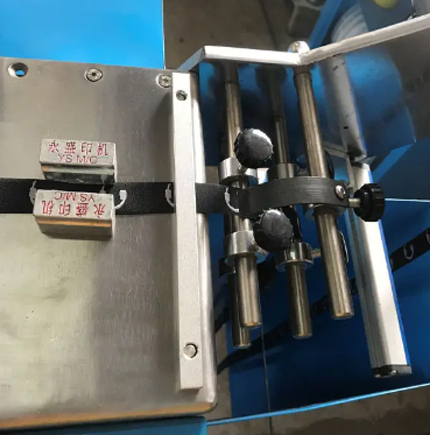
Manufacturing Applications Across Industries
Food Processing and Packaging
Food manufacturers have embraced ultrasonic cutting machine technology for processing delicate items such as baked goods, confections, and frozen products. The clean cutting action prevents ingredient compression or structural damage that commonly occurs with traditional blade cutting. Bakeries utilize ultrasonic systems for portioning layered cakes, cutting filled pastries, and creating precise portions without disturbing decorative elements.
In cheese processing facilities, ultrasonic cutting eliminates the sticking problems associated with conventional knives when cutting soft or aged cheeses. The vibrating action prevents cheese from adhering to the cutting surface, resulting in cleaner cuts and reduced product waste. Similarly, chocolate manufacturers rely on ultrasonic systems to cut filled chocolates and confections without disturbing delicate fillings or surface decorations.
Frozen food processors benefit from the ability of ultrasonic cutting to slice through frozen materials without generating excessive heat that could cause partial thawing or surface degradation. The technology maintains product integrity while achieving the precise portioning required for consistent packaging and presentation standards.
Textile and Apparel Manufacturing
Textile manufacturers have integrated Ultrasonic Cutting Machine technology to address challenges in processing synthetic fabrics, technical textiles, and multi-layer materials. The sealed edge cutting capability eliminates fraying in synthetic materials, reducing the need for additional finishing processes and improving production efficiency.
Manufacturers of protective clothing and industrial textiles benefit from the ability to cut and simultaneously seal fabric edges in a single operation. This capability is particularly valuable when processing materials with waterproof coatings or laminated structures where traditional cutting methods might compromise barrier properties.
The precision achievable with ultrasonic systems enables manufacturers to create intricate patterns and detailed cuts in technical fabrics used for filtration, automotive applications, and medical devices. The clean cutting action preserves fabric structure and maintains material performance characteristics critical to end-use applications.
Precision Manufacturing Benefits
Dimensional Accuracy and Consistency
Manufacturing precision depends heavily on maintaining tight dimensional tolerances across production runs. Ultrasonic cutting machine technology delivers exceptional dimensional consistency due to the controlled nature of the cutting process. The minimal cutting forces required reduce material deformation and eliminate the variations commonly associated with mechanical compression during cutting.
The predictable cutting action enables manufacturers to achieve tolerances within micrometers for appropriate materials and applications. This level of precision is particularly valuable in electronics manufacturing, where component dimensions directly impact assembly fit and electrical performance. Medical device manufacturers also rely on this precision for creating components that must meet strict regulatory standards.
Automated ultrasonic cutting systems can maintain consistent cutting parameters across extended production runs, eliminating the variations that occur with manual processes or conventional cutting methods subject to tool wear. This consistency translates directly into improved product quality and reduced waste from out-of-specification parts.
Surface Quality and Edge Characteristics
The surface quality achieved through ultrasonic cutting often eliminates the need for secondary finishing operations, reducing production time and associated costs. The vibrating cutting action creates smooth, clean edges without burrs, tears, or compression marks that require additional processing to remove.
For materials prone to delamination or edge separation, ultrasonic cutting machine systems can simultaneously seal edges while cutting, creating hermetic seals that enhance product performance and durability. This dual-function capability is particularly valuable in packaging applications where barrier properties are critical to product preservation.
The absence of heat generation during the cutting process prevents material property changes that can occur with thermal cutting methods. This characteristic is essential when processing temperature-sensitive materials or maintaining specific material characteristics required for end-use performance.
Implementation Strategies for Manufacturing
Production Line Integration
Successful implementation of ultrasonic cutting machine technology requires careful consideration of production line integration and workflow optimization. Manufacturers must evaluate material handling systems, cutting station design, and downstream processing requirements to ensure seamless operation. The compact design of most ultrasonic systems facilitates integration into existing production lines with minimal disruption to established workflows.
Automated feeding systems can be synchronized with ultrasonic cutting operations to maintain consistent material positioning and cutting speeds. This integration eliminates manual handling variations and enables unmanned operation during extended production runs. The programmable nature of modern systems allows for quick changeovers between different products or cutting patterns without extensive setup time.
Quality control systems can be integrated with ultrasonic cutting operations to provide real-time feedback on cutting quality and dimensional accuracy. Vision systems and measurement devices can automatically inspect cut parts and reject non-conforming items, maintaining consistent output quality while minimizing manual inspection requirements.
Operator Training and Safety Considerations
Effective ultrasonic cutting machine operation requires comprehensive operator training covering both technical aspects and safety procedures. Operators must understand the relationship between cutting parameters, material properties, and desired outcomes to optimize system performance for different applications.
Safety protocols address the unique characteristics of ultrasonic equipment, including proper handling of high-frequency energy systems and awareness of potential hearing protection requirements. While ultrasonic frequencies are typically above human hearing range, some systems may produce audible harmonics that require appropriate protective measures.
Maintenance training ensures operators can perform routine system checks, identify potential issues before they impact production, and maintain cutting quality through proper equipment care. Understanding the relationship between cutting parameters and tool wear helps optimize system longevity and performance consistency.
Material Compatibility and Process Optimization
Material Selection Criteria
The effectiveness of ultrasonic cutting machine applications depends significantly on material characteristics and properties. Soft, viscoelastic materials generally respond well to ultrasonic cutting due to their ability to absorb and dissipate vibrational energy effectively. Thermoplastic materials often benefit from the slight heat generation that occurs during cutting, which can create sealed edges without requiring additional processing.
Hard, brittle materials may require different approach strategies, as the vibrational energy must be sufficient to overcome molecular bonds without causing material fracture or chipping. Understanding material response to ultrasonic energy helps manufacturers select appropriate cutting parameters and achieve optimal results.
Composite materials and multi-layer structures present unique considerations for ultrasonic cutting applications. The varying properties of different layers require careful parameter selection to achieve clean cuts through all material components without compromising structural integrity or delaminating layer interfaces.
Process Parameter Optimization
Optimizing ultrasonic cutting machine performance requires systematic evaluation of amplitude, frequency, cutting speed, and contact pressure settings. These parameters interact with each other and with material properties to determine cutting quality, productivity, and tool life. Manufacturers typically begin with recommended settings for similar materials and applications, then fine-tune parameters based on specific requirements.
Amplitude settings control the intensity of vibrations and directly impact cutting effectiveness and edge quality. Higher amplitudes generally increase cutting speed but may also increase tool wear and affect surface finish quality. Finding the optimal balance requires testing and validation with actual production materials.
Cutting speed optimization balances productivity requirements with quality objectives. Faster cutting speeds increase throughput but may compromise edge quality or dimensional accuracy if vibrational energy is insufficient to complete the cutting action effectively. Systematic testing helps identify the optimal speed range for specific material and quality combinations.
Quality Control and Process Monitoring
Real-Time Monitoring Systems
Advanced ultrasonic cutting machine installations incorporate comprehensive monitoring systems that track key performance indicators throughout the production process. These systems monitor parameters such as cutting force, vibration amplitude, temperature, and power consumption to detect variations that might indicate developing problems or changing material conditions.
Data logging capabilities enable manufacturers to establish baseline performance metrics and identify trends that might indicate the need for maintenance or parameter adjustments. This proactive approach to system management helps prevent quality issues and maximize equipment uptime.
Integration with manufacturing execution systems provides production managers with real-time visibility into cutting operations and enables rapid response to any deviations from established quality standards. Automated alert systems notify operators when parameters drift outside acceptable ranges, enabling immediate corrective action.
Quality Validation Procedures
Establishing robust quality validation procedures ensures that ultrasonic cutting machine operations consistently meet production standards. These procedures typically include dimensional verification, surface quality assessment, and edge characteristic evaluation. Automated measurement systems can provide rapid feedback on cutting quality without interrupting production flow.
Statistical process control methods help identify patterns or trends in cutting performance that might indicate systematic issues requiring attention. Regular analysis of quality data enables continuous improvement initiatives that optimize both cutting performance and overall production efficiency.
Documentation of cutting parameters and quality results provides traceability and supports root cause analysis when quality issues arise. This information also facilitates knowledge transfer and helps establish best practices for different material and application combinations.
FAQ
What materials work best with ultrasonic cutting machine technology
Ultrasonic cutting machines perform exceptionally well with soft materials such as food products, textiles, plastics, rubber, and composite materials. Thermoplastic materials are particularly suitable because the slight heat generation during cutting can create sealed edges. The technology also works effectively with fibrous materials, foams, and multi-layer structures where traditional cutting methods might cause delamination or edge fraying.
How does ultrasonic cutting compare to traditional methods in terms of precision
Ultrasonic cutting machine technology typically achieves superior precision compared to conventional cutting methods due to the controlled vibrational cutting action and minimal cutting forces required. The technology can maintain dimensional tolerances within micrometers for suitable applications, and the consistent cutting parameters eliminate variations associated with tool wear or operator technique. The clean cutting action also reduces or eliminates the need for secondary finishing operations.
What are the main advantages of implementing ultrasonic cutting in manufacturing
The primary advantages include exceptional cutting precision, clean edge quality, minimal material waste, reduced processing time, and the ability to cut and seal edges simultaneously. Ultrasonic cutting machine systems also offer consistent performance across production runs, reduced tool wear compared to conventional methods, and the capability to process difficult materials that might clog or bind traditional cutting tools. The technology often eliminates secondary finishing operations, reducing overall production costs.
How do manufacturers determine if ultrasonic cutting is suitable for their application
Manufacturers should evaluate material characteristics, precision requirements, production volume, and quality standards to determine suitability. Testing with sample materials using appropriate ultrasonic cutting machine parameters provides the best assessment of potential benefits. Factors to consider include material thickness, cutting pattern complexity, required edge quality, and production speed requirements. Consulting with equipment specialists and conducting trial runs helps validate the technology's effectiveness for specific applications.
Recommended Products
Hot News
-
Reflect On The Cultural Significance Of The Printing Press In Preserving And Disseminating Knowledge
2023-12-08
-
The Role Of The Printing Press In The Global Economy
2023-12-08
-
Environmental Impact: Analyzing The Environmental Footprint Of The Printing Industry
2023-12-08
-
The Frontier Of Printing: 3d Printing And Its Industrial Renaissance
2023-12-08
-
The Evolution And Impact Of The Printing Press
2023-12-08